

10 Simple West African Recipes: Easy, Joyful Cooking for Every Kitchen
West African cuisine is a celebration of bold flavors, vibrant colors, and communal joy. Yet many people hesitate to explore these dishes, assuming they're complicated or require hard-to-find ingredients. The truth? West African cooking can be remarkably simple, accessible, and absolutely delicious—even if you're working with a basic kitchen and limited time.
This guide brings you easy, joyful West African recipes that welcome everyone to the table, regardless of cooking experience. From comforting one-pot meals to quick snacks and flavorful sides, these dishes will fill your home with warmth and your heart with satisfaction.
Why West African Recipes Deserve a Place in Your Kitchen
The Joy of Bold Flavors
West African cooking doesn't whisper—it sings. The cuisine celebrates:
- Rich, layered spices that create depth without overwhelming
- Tomato-based sauces that are both comforting and complex
- Peanuts and groundnuts that add nutty richness
- Fresh peppers that bring heat and brightness
- Aromatic ingredients like ginger, garlic, and onions as the foundations
Simplicity Meets Satisfaction
Many West African dishes follow intuitive cooking methods:
- One-pot meals that simmer while you relax
- Simple frying techniques for crispy delights
- Straightforward boiling and mashing for comfort foods
- Flexible recipes that adapt to what you have on hand
Community and Connection
Food in West African culture is meant to be shared. These recipes encourage gathering around the table, passing plates, and creating memories. Even if you're cooking for one, these dishes have a way of making you feel connected to something larger.
Essential Ingredients You'll Need
The Foundation Five
These ingredients appear repeatedly in West African cooking and are increasingly available in mainstream supermarkets:
- Tomatoes and Tomato Paste: Fresh, canned, or paste—tomatoes form the base of countless sauces
- Onions: Yellow or red onions add sweetness and depth
- Peppers: Bell peppers, jalapeños, or Scotch bonnets (use what you can handle!)
- Garlic and Ginger: Fresh is ideal, but pre-minced works too
- Cooking Oil: Vegetable oil, or palm oil for authentic flavor
Spice Cabinet Essentials
You don't need dozens of spices. Start with these:
- Bouillon cubes (Maggi, Knorr): The secret weapon of West African cooking
- Curry powder: Adds warmth and color
- Thyme: Dried or fresh
- Bay leaves: For depth in stews
- Ground pepper: Black or white
- Salt: To taste
Nice-to-Have Additions
As you explore further:
- Ground crayfish: Adds umami depth to soups and stews
- Locust beans (dawadawa/iru): Fermented seasoning with unique flavor
- Suya spice: Pre-mixed blend for grilling and roasting
- African nutmeg (ehuru): Subtle, warm spice
The Staples
- Rice: Long-grain or basmati
- Beans: Black-eyed peas or brown beans
- Yams or sweet potatoes: For boiling or frying
- Plantains: Green for frying, ripe for sweetness
- Cassava or cassava flour: For fufu or gari
Recipe 1: Jollof Rice

Image from: Zena's Kitchen
Why This Recipe Works
Jollof rice is West Africa's most famous dish for good reason—it's flavorful, satisfying, and feeds a crowd. This simplified version delivers authentic taste without stress.
Ingredients (Serves 4-6)
- 3 cups long-grain rice (rinsed and drained)
- 1 large can (28 oz) crushed tomatoes or tomato sauce
- 1 medium onion, roughly chopped
- 3 cloves garlic
- 1-inch piece ginger
- 2 tbsp tomato paste
- 1/4 cup vegetable oil
- 2 bouillon cubes (Maggi or Knorr)
- 1-2 tsp curry powder
- 1 tsp dried thyme
- 1-2 Scotch bonnet peppers (whole, for flavor without too much heat)
- 3 cups chicken or vegetable stock
- Salt and pepper to taste
- Optional: 1 cup mixed vegetables (carrots, peas, green beans)
Instructions
Step 1: Create the Base
- Blend tomatoes, onion, garlic, and ginger until smooth
- Heat oil in a large pot over medium-high heat
- Add tomato paste and fry for 2-3 minutes, stirring constantly
- Pour in the blended tomato mixture
- Cook for 15-20 minutes, stirring occasionally, until the sauce thickens and oil rises to the top
Step 2: Season and Combine
- Add curry powder, thyme, crushed bouillon cubes, and whole peppers
- Stir well and cook for 2 minutes
- Add the rinsed rice and stir to coat every grain with the sauce
- Pour in the stock (liquid should just cover the rice)
- Add vegetables if using
Step 3: Cook to Perfection
- Bring to a boil, then reduce heat to low
- Cover tightly with foil, then the pot lid (this traps steam)
- Cook for 30-35 minutes without lifting the lid
- Check if rice is tender and liquid is absorbed
- If needed, add a splash of water and cook 5 more minutes
- Remove from heat and let rest for 5 minutes
Step 4: Serve with Joy Fluff the rice with a fork, remove the whole peppers, and serve with fried plantains, coleslaw, or grilled chicken.
Pro Tips
- The key to great jollof is frying the tomato base until the raw taste disappears
- Don't skip the foil under the lid—it's the secret to fluffy rice
- For "party jollof" with crispy bottom layer (socarrat), increase heat for the last 5 minutes
- Taste and adjust seasoning before serving
Recipe 2: Nigerian Fried Rice
Image from: Sisi Jemimah
Why This Recipe Works
Fried rice is Nigeria's celebration dish, served at parties, weddings, and special occasions. It's easier than Jollof and just as delicious.
Ingredients (Serves 4-6)
- 3 cups cooked and cooled rice (day-old rice works best)
- 1 cup mixed vegetables (carrots, green beans, peas, corn)
- 1 large onion, diced
- 3 cloves garlic, minced
- 1-inch ginger, minced
- 2 bouillon cubes
- 2 tbsp curry powder
- 1 tsp thyme
- 1/4 cup vegetable oil
- 2-3 bay leaves
- Optional: 1 cup cooked shrimp, chicken, or liver
- Salt and pepper to taste
Instructions
Step 1: Prep Your Ingredients All chopping and measuring should be done before you start cooking—fried rice moves fast!
Step 2: Season the Rice
- If your cooked rice is bland, sprinkle with 1 bouillon cube, curry powder, and a little water
- Mix well and set aside
Step 3: Stir-Fry
- Heat oil in a large wok or wide pot over high heat
- Add onions and sauté until soft (2 minutes)
- Add garlic and ginger, stir for 30 seconds
- Add all vegetables and stir-fry for 3-4 minutes
- Add remaining bouillon cube, curry powder, thyme, and bay leaves
- If using meat or shrimp, add now and heat through
Step 4: Add the Rice
- Add the seasoned rice to the vegetables
- Stir-fry for 5-7 minutes, breaking up clumps
- Taste and adjust seasoning
- Remove bay leaves before serving
Pro Tips
- Use less liquid when cooking the rice initially—slightly dry rice fries better
- Keep the heat high for that restaurant-style texture
- Add a splash of soy sauce for extra umami (not traditional, but delicious)
- Garnish with fresh vegetables or herbs for color
Recipe 3: Red Red - Ghanaian Beans and Plantains

Image from: BBC Good Food
Why This Recipe Works
Red Red is comfort food at its finest—creamy beans in spicy tomato sauce, served with sweet fried plantains. It's vegetarian, filling, and bursting with flavor.
Ingredients (Serves 4)
For the Beans:
- 2 cups black-eyed peas or cowpeas (canned or pre-cooked)
- 1 large onion, chopped
- 3 cloves garlic, minced
- 1-inch ginger, grated
- 1 can (14 oz) diced tomatoes
- 3 tbsp tomato paste
- 1/4 cup red palm oil (or vegetable oil)
- 1-2 tsp chili powder or fresh chilies
- 1 bouillon cube
- 1 tsp smoked paprika
- Salt to taste
For the Plantains:
- 2-3 ripe plantains (yellow with black spots)
- Oil for frying
- Pinch of salt
Instructions
Step 1: Make the Bean Stew
- Heat palm oil in a pot over medium heat
- Add onions and sauté until golden (5 minutes)
- Add garlic and ginger, cook for 1 minute
- Stir in tomato paste and fry for 2-3 minutes
- Add diced tomatoes, chili, paprika, and bouillon cube
- Cook for 10 minutes until sauce thickens
- Add beans with some of their liquid
- Simmer for 15-20 minutes, stirring occasionally
- The stew should be thick and creamy
- Season with salt
Step 2: Fry the Plantains
- Peel plantains and slice diagonally (about 1/2-inch thick)
- Heat 1/2 inch oil in a frying pan over medium-high heat
- Fry plantain slices in batches until golden on both sides (2-3 minutes per side)
- Drain on paper towels and sprinkle with salt
Step 3: Serve Together Plate the bean stew and arrange fried plantains around it or on top. Serve with gari (cassava flakes) or rice.
Pro Tips
- If using dried beans, soak overnight and cook until very soft before making the stew
- Don't skip the palm oil—it gives the authentic red color and flavor
- The plantains should be ripe (sweet) but still firm enough to hold shape when fried
- Leftovers taste even better the next day
Recipe 4: Egusi Soup

Why This Recipe Works
Egusi (melon seed) soup is a West African staple that's surprisingly simple. The ground seeds create a rich, thick texture that's endlessly satisfying.
Ingredients (Serves 4-6)
- 2 cups ground egusi (melon seeds)
- 1 lb meat (beef, goat, or chicken), cut into pieces
- 1/2 lb dried fish or stockfish (optional but traditional)
- 1 medium onion, chopped
- 3-4 cups fresh spinach or bitter leaf (chopped)
- 1 can (14 oz) diced tomatoes or 4 fresh tomatoes, blended
- 3 tbsp ground crayfish
- 2 Scotch bonnet peppers (adjust to taste)
- 2 bouillon cubes
- 1/2 cup palm oil
- 4 cups stock or water
- Salt to taste
Instructions
Step 1: Prepare the Proteins
- Season meat with salt, pepper, bouillon cube, and onions
- Cook in a pot with water until tender (30-45 minutes)
- Remove meat, reserve stock
- If using dried fish, soak in hot water, debone, and set aside
Step 2: Build the Soup Base
- Heat palm oil in a large pot
- Add chopped onions and peppers, sauté for 2 minutes
- Add tomatoes and cook for 10 minutes
- Add ground crayfish and stir
Step 3: Add the Egusi
- Add ground egusi to the pot
- Stir quickly for 2-3 minutes (don't let it burn)
- Add stock gradually, stirring to prevent lumps
- The consistency should be thick like oatmeal
- Simmer for 10-15 minutes, stirring occasionally
Step 4: Finish the Soup
- Add cooked meat and fish
- Add chopped spinach or bitter leaf
- Stir and cook for 5 minutes until greens wilt
- Adjust seasoning and consistency (add water if too thick)
- Simmer for 5 more minutes
Step 5: Serve Serve hot with fufu, pounded yam, eba (garri), or rice.
Pro Tips
- Egusi can burn quickly, so watch it carefully when first adding to oil
- Some cooks add a little water to the ground egusi before adding to prevent lumps
- For a smoother soup, blend half the egusi with some stock before adding
- This soup tastes better the next day as flavors meld
Recipe 5: Moi Moi - Nigerian Steamed Bean Pudding
Why This Recipe Works
Moi Moi is protein-packed, flavorful, and naturally gluten-free. It's perfect as a main dish, side, or snack.
Ingredients (Serves 6-8)
- 2 cups peeled black-eyed peas (or 3 cups unpeeled beans)
- 2 red bell peppers
- 1-2 Scotch bonnet peppers (adjust for heat)
- 1 large onion
- 3 cloves garlic
- 1-inch ginger
- 1/2 cup vegetable oil
- 2 bouillon cubes
- 1-2 cups water or stock
- Optional additions: hard-boiled eggs, corned beef, sardines, or cooked shrimp
- Salt to taste
Instructions
Step 1: Prepare the Beans
- If using unpeeled beans, soak in water for 30 minutes
- Rub between palms to remove skins
- The beans should be white after peeling
Step 2: Blend the Base
- Add beans, peppers, onion, garlic, and ginger to blender
- Add just enough water to blend to a smooth consistency
- The batter should be thick but pourable (like pancake batter)
- Pour into a large bowl
Step 3: Season the Batter
- Add oil, crushed bouillon cubes, and salt
- Mix thoroughly with a wooden spoon or hand mixer
- Beat for 2-3 minutes to incorporate air (this makes it fluffy)
- Taste and adjust seasoning
Step 4: Prepare for Steaming
- Pour batter into greased muffin tins, ramekins, or aluminum foil packets
- If using, add boiled egg pieces, corned beef, or sardines to each portion
- Cover each container with foil
Step 5: Steam
- Bring water to boil in a large pot (water should come halfway up containers)
- Carefully place containers in the pot
- Cover and steam for 45-60 minutes
- Check if done by inserting a knife—it should come out clean
- Let cool slightly before unmolding
Pro Tips
- Peeled beans are sold ready-to-use at African stores (huge time-saver!)
- The batter can be made ahead and refrigerated for up to 24 hours
- Leftover moi moi can be sliced and fried for a different texture
- Use banana leaves instead of foil for an authentic, aromatic touch
Recipe 6: Kelewele - Spicy Fried Plantains

Why This Recipe Works
Kelewele transforms simple plantains into an addictive snack or side dish. The spice blend is magical.
Ingredients (Serves 4)
- 4 ripe plantains (very ripe, almost black)
- 1-inch ginger, grated
- 1-2 tsp cayenne pepper or chili powder
- 1/2 tsp ground cloves
- 1/2 tsp ground nutmeg
- 1/2 tsp ground pepper
- Salt to taste
- Oil for deep frying
Instructions
Step 1: Prepare the Spice Mix
- Combine ginger, cayenne, cloves, nutmeg, pepper, and salt in a small bowl
- Add 1-2 tablespoons water to make a paste
Step 2: Prepare Plantains
- Peel plantains (very ripe ones peel easily)
- Cut into cubes (about 1-inch pieces)
- Place in a bowl
Step 3: Season
- Pour spice paste over plantain cubes
- Mix gently to coat every piece
- Let sit for 10-15 minutes to absorb flavors
Step 4: Fry
- Heat oil in a deep pan or pot (oil should be about 2 inches deep)
- Test with one piece—it should sizzle immediately
- Fry plantains in batches, don't overcrowd
- Fry for 3-4 minutes until golden and slightly crispy
- Drain on paper towels
Step 5: Serve Serve hot as a snack or side dish with peanuts on the side.
Pro Tips
- The riper the plantain, the sweeter and more flavorful
- Don't over-season—you can always add more spice after frying
- These are best eaten fresh but can be reheated in the oven
- Try serving with roasted peanuts or grilled fish for a complete meal
Recipe 7: Waakye - Ghanaian Rice and Beans
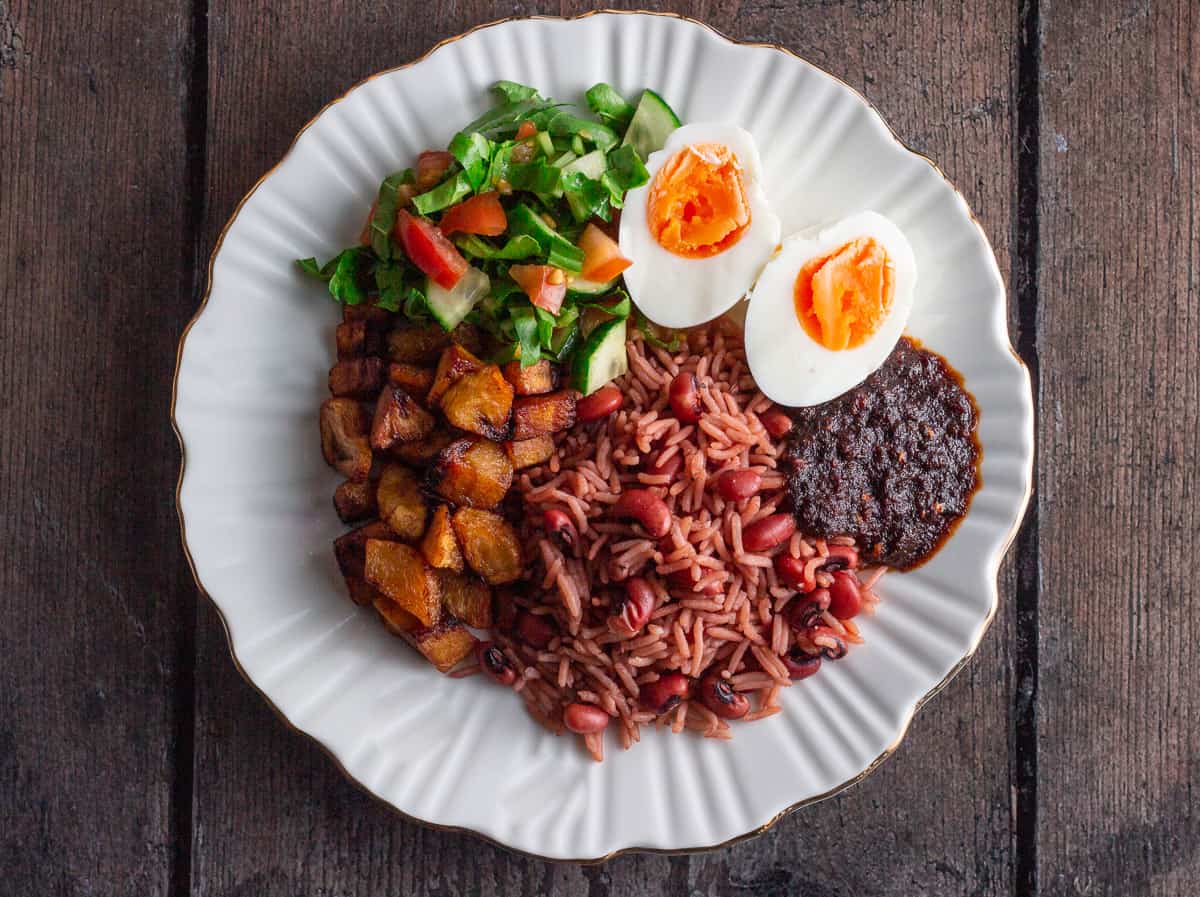
Image from: Eat well abi
Why This Recipe Works
Waakye is Ghana's answer to rice and beans, made distinctive by sorghum leaves that give it a unique burgundy color. It's hearty, simple, and deeply satisfying.
Ingredients (Serves 4-6)
- 2 cups long-grain rice
- 1 cup black-eyed peas or kidney beans
- 4-5 dried sorghum leaves (waakye leaves) or 1 tsp baking soda
- 1 medium onion, chopped
- 4 cups water
- Salt to taste
For Serving:
- Shito (black pepper sauce)
- Fried plantains
- Hard-boiled eggs
- Gari (cassava flakes)
- Avocado slices
Instructions
Step 1: Prepare the Beans
- If using dried beans, soak overnight
- Boil beans with sorghum leaves for 30-40 minutes until tender
- The water will turn reddish-brown (this colors the rice)
Step 2: Cook Together
- Add washed rice to the cooked beans (don't drain the water)
- Add more water if needed—liquid should be 1 inch above rice and beans
- Add salt and chopped onion
- Bring to a boil
- Reduce heat to low, cover tightly
- Cook for 25-30 minutes until rice is tender
Step 3: Fluff and Serve
- Remove from heat and let steam for 5 minutes
- Remove sorghum leaves
- Fluff with a fork
- Serve with your choice of accompaniments
Pro Tips
- If you can't find sorghum leaves, baking soda gives similar color (but not the same flavor)
- Waakye is traditionally a breakfast dish in Ghana but works any time
- The magic is in the accompaniments—shito (pepper sauce) is essential
- Leftovers make excellent fried rice the next day
Recipe 8: Akara - Bean Fritters

Why This Recipe Works
Akara (also called kosai or bean cakes) are crispy outside, fluffy inside, and perfect for breakfast, lunch, or snacking.
Ingredients (Makes about 20 fritters)
- 2 cups peeled black-eyed peas
- 1 small onion
- 1-2 Scotch bonnet peppers (or to taste)
- Salt to taste
- Oil for deep frying
- Optional: 1/4 cup chopped bell pepper, 1 bouillon cube
Instructions
Step 1: Prepare the Batter
- Blend beans with very little water until smooth but thick
- Add roughly chopped onion and peppers to the batter (don't blend them in—you want texture)
- Add salt and bouillon if using
- Whisk vigorously for 2-3 minutes to incorporate air
- The batter should hold its shape when scooped
Step 2: Heat the Oil
- Heat oil in a deep pot (oil should be about 3 inches deep)
- Oil is ready when a drop of batter floats immediately and browns slowly
Step 3: Fry the Akara
- Using two spoons or an ice cream scoop, drop scoops of batter into hot oil
- Don't overcrowd the pot
- Fry for 3-4 minutes per side until golden brown
- They should puff up and develop a crispy exterior
- Drain on paper towels
Step 4: Serve hot with pap (ogi/akamu), bread, or as a side to any meal. Also great with hot sauce!
Pro Tips
- The batter shouldn't be too thin or the fritters will be flat
- Whipping air into the batter is crucial for fluffy akara
- Maintain steady oil temperature—too hot and they'll burn outside while raw inside
- Add a little diced onion to the batter for extra texture and flavor
- These are best eaten fresh but can be reheated in the oven
Recipe 9: Groundnut Soup - West African Peanut Stew
:max_bytes(150000):strip_icc()/__opt__aboutcom__coeus__resources__content_migration__serious_eats__seriouseats.com__recipes__images__2017__06__20170511-groundnut-soup-vicky-wasik-2-2-e832005ef69c473f8f45a0a2a91f7775.jpg)
Image from: Serious Eats
Why This Recipe Works
This soup is creamy, rich, and comforting without any cream. Peanuts create the velvety texture naturally.
Ingredients (Serves 4-6)
- 1 lb chicken pieces or beef chunks
- 1 cup natural peanut butter (or 1.5 cups ground roasted peanuts)
- 1 large onion, chopped
- 4 cloves garlic, minced
- 1-inch ginger, grated
- 1 can (14 oz) crushed tomatoes
- 2 tbsp tomato paste
- 2-3 Scotch bonnet peppers
- 2 bouillon cubes
- 1 tsp ground crayfish (optional)
- 4-5 cups chicken stock or water
- 3 tbsp oil
- Salt and pepper to taste
Instructions
Step 1: Brown the Meat
- Season meat with salt, pepper, and 1 bouillon cube
- Brown in a pot with a little oil
- Remove and set aside
Step 2: Build the Base
- In the same pot, add more oil if needed
- Sauté onions until soft
- Add garlic and ginger, cook for 1 minute
- Stir in tomato paste and cook for 3 minutes
- Add crushed tomatoes and cook for 10 minutes
- Step 3: Add Peanut Butter
- Mix peanut butter with 1 cup warm stock until smooth
- Pour into the pot and stir well
- Add remaining stock gradually
- Add whole peppers, crayfish, and remaining bouillon cube
- Return meat to pot
Step 4: Simmer
- Bring to a boil, then reduce to low heat
- Simmer for 30-40 minutes, stirring occasionally
- The soup should thicken and turn a rich brown color
- Add water if it gets too thick
- Remove peppers before serving
Step 5: Serve Serve with rice, fufu, or boiled yam.
Pro Tips
- Use natural peanut butter with no added sugar
- The longer this simmers, the better it tastes
- Some people add a spoonful of peanut butter to their bowl for extra richness
- Vegetarian version: Skip the meat and add vegetables like sweet potatoes, eggplant, and okra
- This soup freezes beautifully
Recipe 10: Puff Puff - Sweet Fried Dough

Why This Recipe Works
Puff Puff is West Africa's answer to doughnuts—simple, sweet, and impossible to resist. Perfect for breakfast, dessert, or anytime snacking.
Ingredients (Makes about 25-30 pieces)
- 3 cups all-purpose flour
- 1/2 cup sugar (adjust to taste)
- 2 tsp instant yeast
- 1/4 tsp salt
- 1/4 tsp nutmeg (optional)
- 2 cups warm water (approximately)
- 1 tsp vanilla extract (optional)
- Oil for deep frying
Instructions
Step 1: Make the Batter
- Mix flour, sugar, yeast, salt, and nutmeg in a large bowl
- Add warm water gradually, stirring constantly
- The batter should be slightly thick but pourable (like thick pancake batter)
- Add vanilla if using
- Cover bowl with plastic wrap or a clean towel
- Let rise in a warm place for 1-2 hours until doubled and bubbly
Step 2: Prepare to Fry
- Heat oil in a deep pot (about 3 inches of oil)
- Oil is ready when a small drop of batter rises quickly and browns slowly
Step 3: Fry the Puff Puff
- Using your hand or two spoons, scoop small amounts of batter
- Drop carefully into hot oil
- Fry in batches, don't overcrowd
- Turn occasionally for even browning (2-3 minutes per batch)
- They should be golden brown and cooked through
- Drain on paper towels
Step 4: Serve warm or at room temperature. Dust with powdered sugar if desired.
Pro Tips
- The batter can rise for up to 4 hours for more flavor development
- Keep oil at medium heat—too hot and they'll burn outside while raw inside
- For savory puff puff, reduce sugar and add chopped onions and peppers
- Store in an airtight container for up to 2 days
- Reheat in the oven for best results
Essential Cooking Techniques
The Art of Frying Tomato Paste
This is fundamental to many West African dishes. The goal is to remove the raw, metallic taste and develop sweetness:
- Heat oil until shimmering
- Add tomato paste
- Stir constantly for 3-5 minutes
- The paste will darken and oil will separate
- This is the perfect base for sauces
Making Smooth Fufu (Swallow)
Fufu and other "swallows" are staples that accompany soups:
Instant Pounded Yam:
- Boil water with a pinch of salt
- Add pounded yam flour gradually, stirring vigorously
- The consistency should be thick and stretchy
- Mold into balls and serve warm
Eba (Garri):
- Boil water
- Pour garri into a bowl
- Add hot water gradually, stirring with a wooden spatula
- It should form a smooth, moldable dough
Achieving Perfect Rice Every Time
- Rinse rice until water runs clear (removes excess starch)
- Use the right water ratio: 1.5 cups water per 1 cup rice
- Bring to a boil, then reduce to lowest heat
- Cover tightly (use foil under lid if needed)
- Don't lift the lid until cooking time is complete
- Let rest 5 minutes before fluffing
Building Your West African Pantry
Start with These Basics
Week 1:
- Bouillon cubes (Maggi or Knorr)
- Rice
- Canned tomatoes
- Onions and garlic
- Curry powder and thyme
Week 2:
- Palm oil
- Ground crayfish
- Dried peppers
- Plantains
- Black-eyed peas
Week 3:
- Egusi (ground melon seeds)
- Stockfish or dried fish
- Peanut butter
- Gari or fufu flour
- Dawadawa (locust beans)
Where to Shop
- African grocery stores: Best for authentic ingredients
- International aisles: Major supermarkets increasingly stock African ingredients
- Online retailers: Many specialty items available for delivery
- Asian markets: Often carry substitute ingredients
Common Substitutions
Don't let missing ingredients stop you from cooking! Here are practical swaps:
- Palm oil → Vegetable oil + paprika for color (flavor won't be identical)
- Scotch bonnet peppers → Habaneros or jalapeños (adjust quantity)
- Ground crayfish → Anchovy paste or fish sauce (use sparingly)
- Maggi cubes → Any bouillon cubes + a dash of soy sauce
- Egusi → Pumpkin seeds (ground) + sunflower seeds
- Plantains → Firm bananas (different flavor but works in a pinch)
- Bitter leaf → Spinach, kale, or collard greens
- Fufu → Mashed potatoes (texture is different but concept is similar)
Tips for Success
Mise en Place (Prep First)
West African cooking often moves quickly once you start. Before turning on the heat:
- Chop all vegetables
- Measure spices
- Have liquids ready
- Prepare your proteins
Taste as You Go
The recipes provide guidelines, but your palate is the final judge:
- Start with less seasoning, add more as needed
- Balance heat levels to your preference
- Adjust salt at the end of cooking
- Trust your instincts
Don't Fear Bold Flavors
West African cuisine celebrates intensity:
- Don't be shy with aromatics (onions, garlic, ginger)
- Layer flavors by adding spices at different stages
- Let dishes simmer to develop depth
- Embrace heat from peppers (but start mild if unsure)
Batch Cook and Freeze
Many West African dishes freeze beautifully:
- Soups and stews (without greens)
- Jollof rice
- Bean dishes
- Moi moi
- Cooked proteins in sauce
Make It Social
Cooking West African food is more fun with company:
- Invite friends to help prep ingredients
- Make it a cooking party
- Share the finished dishes
- Exchange recipes and tips
Meal Planning with West African Recipes
Easy Weeknight Dinners
Monday: Jollof Rice with fried plantains Tuesday: Waakye with shito and boiled eggs Wednesday: Fried Rice with simple cucumber salad Thursday: Red Red (beans and plantains) Friday: Groundnut Soup with rice
Weekend Projects
When you have more time, try:
- Egusi Soup with homemade fufu
- Moi Moi from scratch (peeling your own beans)
- Multiple stews to freeze for later
- Homemade puff puff for the family
Budget-Friendly Options
These dishes feed many for little cost:
- Red Red (beans and plantains)
- Waakye (rice and beans)
- Jollof Rice (stretch with vegetables)
- Fried Rice (use leftover rice and vegetables)
- Groundnut Soup (peanut butter is economical)
Adapting to Dietary Needs
Vegetarian/Vegan Adaptations
Most West African dishes adapt easily:
- Replace meat with mushrooms, tofu, or extra vegetables
- Use vegetable stock instead of meat-based